

Marketing analytics is the process of tracking and measuring your marketing campaigns to make better business decisions. Instead of wondering if your ads work, you see exactly how many people clicked, converted, and bought from each campaign.
Frankly, most businesses are flying blind when it comes to their marketing spend (and yes, we’ve all been there with the “let’s just try everything” approach). Without campaign analytics, you can’t tell what return on investment each channel delivers.
This article shows you what marketing metrics reveal about potential customers, how analytics tools guide your ad spend, and which key performance indicators help you grow.
Stop guessing and start knowing what works.
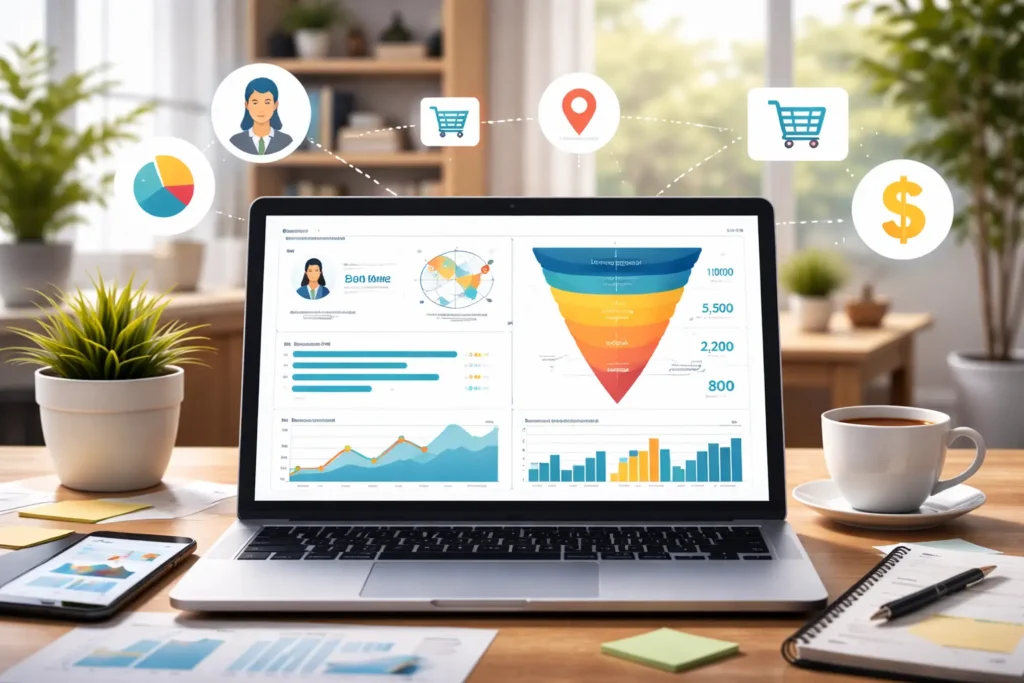
The truth is that companies waste a lot of their marketing budgets on the wrong audience. Luckily, marketing analytics shows you exactly who visits your site and what they do there. You learn two important things.
Your target audience leaves clues everywhere they click. When someone lands on your pricing page but leaves in 10 seconds, the tracking shows what went wrong. The price may be too high, or the page loads too slowly.
Patterns like this emerge fast. Your blog posts might keep people reading for 5 minutes, while your product pages lose them in 30 seconds. These user interactions pinpoint where potential customers drop off in your marketing funnel, so you know exactly what needs fixing.
Customer data breaks down who your visitors are by age, location, and device type. For example, one local business discovered 70% of their traffic came from mobile devices. But their site did not work well on phones. And so, they fixed it, and conversions jumped 40%.
Drawing from our experience with user interface analytics, we’ve seen how behavioral data changes the way companies read their audience. You learn when people are most active online. This ends up helping you time your marketing campaigns. Remember, different segments interact with your relevant content differently. As a result, you canprepare personalized messaging for each group.
Once you know who’s visiting, the next question is whether your marketing spend pays off.

When you track marketing metrics, you stop wasting budget on marketing campaigns that don’t work. Take customer acquisition cost, for example. This metric breaks down how much you spend on marketing and sales expenses to get each new customer.
Return on investment makes the choice clearer. This metric shows you how much profit you make compared to what you spent.
For example, one company spent $10,000 on Facebook ads and got a 2% conversion rate. They spent the same amount on Google ads and hit 8%. The numbers told them exactly which advertising campaigns delivered paying customers, so they moved their ad spend to what worked.
That’s exactly how informed decisions happen. When you track marketing metrics through data-driven measurement strategies, you put your marketing spend where it works.
The analytics tools coming up next make this whole process easier.
You don’t need expensive software to start tracking your marketing efforts. Several analytics tools give you everything you need for campaign analytics, and some are free. Let’s break down your best options.
This tool tracks user behavior and conversion paths across your site. You see where people come from and which routes lead to sales. Through our work analyzing user behavior, we’ve learned that Google Analytics becomes even more powerful when you combine it with other platforms for a complete view of campaign performance.
These platforms run from $50 to $800 monthly. We tested HubSpot’s email tracking and found three campaigns with poor audience engagement that looked fine on the surface.
The automated reports save digital marketers hours each week on data collection. Meanwhile, the analytics platform helps you interpret data and spot actionable insights you’d miss otherwise.
Digital marketing metrics from platforms like Facebook show what drives customer engagement with your social media posts. When user interactions spike, sales usually follow within two days. These ad platforms build tracking right in.
With these tools tracking your key metrics, you can focus on the numbers that drive growth.

You need to know your customer acquisition cost and retention rate. This knowledge will help you focus on what brings in money. These two key performance indicators tell you if you’re attracting the right customers and keeping existing customers around (spoiler: keeping customers is way cheaper than finding new ones).
Each metric answers a different question.
These three numbers show you where your money goes and what returns you get.
Marketing decisions backed by tracking beat guesswork every time. You see which campaigns bring customers back and which ones just burn budget, and that clarity changes everything. Campaign analytics shows you exactly where to invest.
You now know what marketing analytics reveals about your potential customers and which analytics tools give you the clearest view. We have also covered how key performance indicators guide your budget decisions and why customer acquisition cost and retention rate drive real growth.
At Movea Tech, we help businesses use data-driven decisions to improve their marketing strategies. Our team walks you through every metric you need to track and every insight you need to grow.
Your next decision begins right now.