
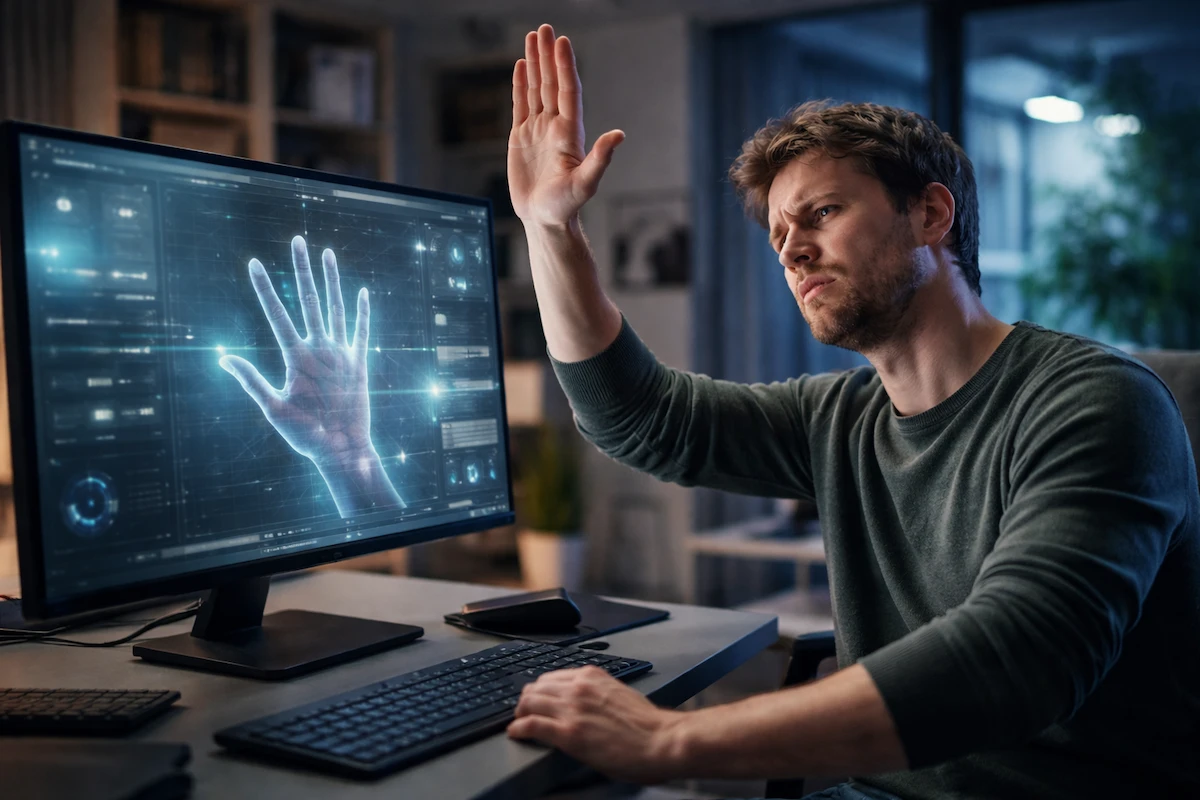
Motion control interfaces look amazing in demos. You wave your hand, something happens on screen, and it feels like the future. But if you’ve ever tried using one for more than a few minutes, you know how quickly that excitement fades. Laggy responses kick in, your arms get tired, and half your gestures don’t even register.
These motion control challenges have kept the technology stuck in novelty mode for years. And at Movea Tech, we’ve seen it firsthand through our work testing and developing motion control systems.
In this article, we break down the real barriers, including technical limits, ergonomic issues, and market hesitation, so you can understand what’s actually holding things back.
Motion control challenges persist because today’s technology still struggles with three core issues: latency, sensor reliability, and environmental interference. Until manufacturers solve these problems, precision motion systems will continue to frustrate users instead of helping them.
Let’s break down each one.
When you move your hand, you expect the screen to respond instantly. But most motion control systems introduce a small delay between your gesture and the system’s reaction.
And frankly, even a 100-millisecond delay is enough to make users give up. That tiny gap breaks the feeling of direct control, and once that connection feels off, people stop trusting the interface.
Gesture recognition systems depend on sensors that work beautifully in controlled demo environments. The problem is that your living room doesn’t look like a tech booth.
Sunlight streaming through a window, furniture cluttering the background, or even wearing dark clothing can throw off sensor accuracy. So what worked perfectly at the store suddenly feels unreliable at home.

Reflective surfaces like glass tables and mirrors create false signals that confuse motion controllers. Competing infrared sources from other devices add another layer of interference. These environmental factors stack up quickly, and most systems have no way to filter them all out.
Most motion interfaces lack clear visual feedback, so users have no way to confirm their gestures are registered. Think about clicking a button on your phone. You see it depressed, maybe feel a small vibration, and you know the action went through. Motion control interfaces rarely offer that same confirmation.
In fact, through our testing at Movea Tech, we’ve watched users try the same gesture three or four times before it finally registers. That kind of frustration drives people back to their mouse or touchscreen within minutes.
The other major gap is standardization. No universal gesture language exists across platforms, which means a swipe in one app might trigger a scroll in another. Users end up relearning controls every time they switch systems, and that learning curve kills adoption fast.
Ultimately, there are too many system designers who still prioritize flashy demos over practical usability testing with real users. And until user-centered design becomes the standard rather than the exception, these problems will keep holding motion control back.
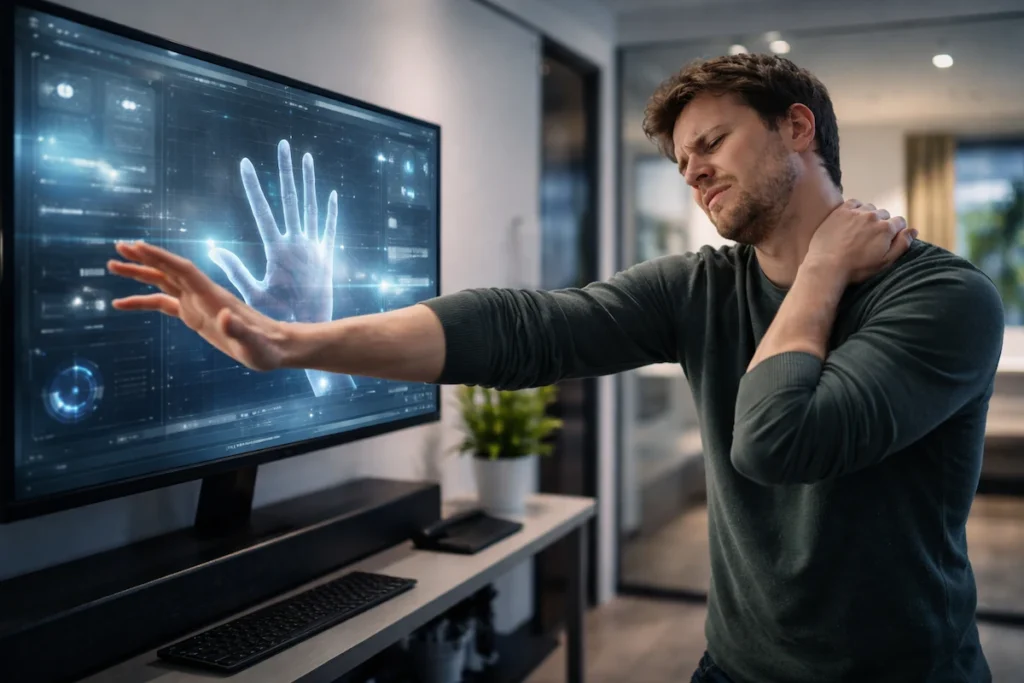
When motion interfaces account for physical comfort, users can actually engage with them for more than a few minutes. That’s why human-centered design and user ergonomics need to go hand in hand.
Here are the three biggest physical barriers holding back adoption.
These physical barriers push users away before they ever get comfortable with the technology. Until system designers prioritize ergonomic design alongside functionality, mass adoption will remain out of reach.
High precision motion sounds great on paper, but current systems fall short when fine control is needed. Try selecting a tiny checkbox by pointing in mid-air, and you’ll see the problem immediately.
Here’s how motion control stacks up against traditional input methods for common tasks.
| Task | Mouse/Touch | Motion Control |
| Select the small button | Easy, precise | Difficult, often misses |
| Drag and drop | Smooth, reliable | Jittery, inconsistent |
| Scroll through the list | Predictable | Overshoots frequently |
Believe it or not, your hand has a natural tremor frequency of 8 to 12 cycles per second, even when you think you’re holding steady. And that constant micro-movement makes pixel-level accuracy nearly impossible for gesture-based interfaces.
Calibration creates another hurdle. Every user’s body moves differently, so one-size-fits-all setups rarely deliver consistent results. Some people gesture widely while others keep movements tight, and most precision motion systems can’t adapt quickly enough to account for these differences.
Until motion control vendors find ways to filter natural body movement without adding lag, high accuracy will stay out of reach for everyday tasks.
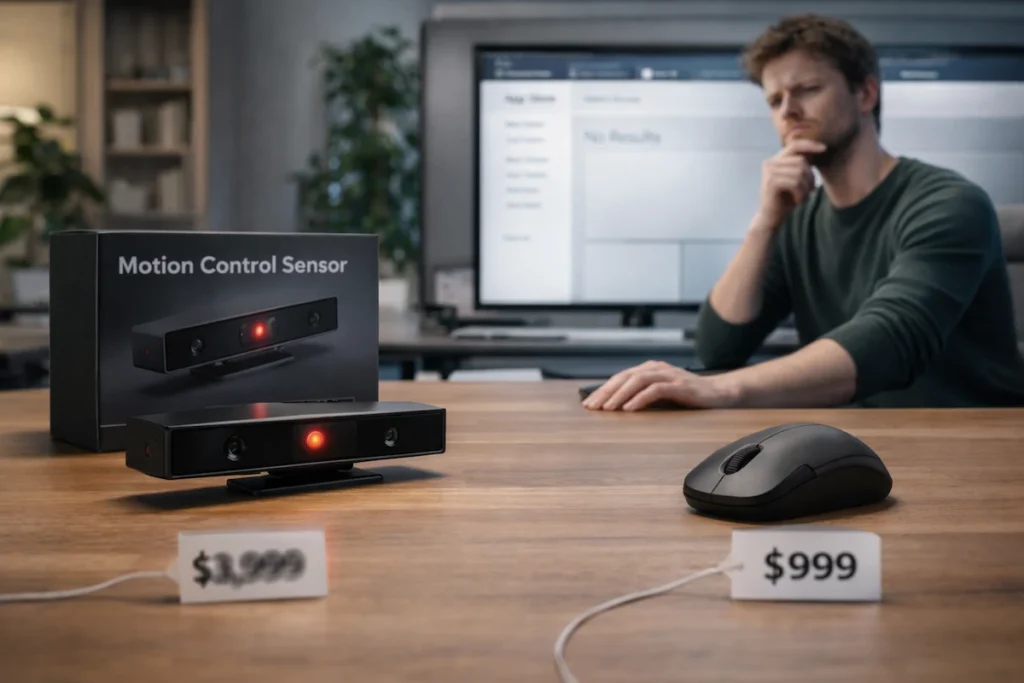
Hardware costs remain a major barrier for average consumers. Current market data shows that high device prices and limited awareness continue to slow growth (we’re talking $300 for decent gesture hardware versus $20 for a reliable mouse). If prices dropped significantly, motion control systems could finally compete with traditional input devices on value, instead of just novelty.
Developers face their own problem. Without a large user base, building motion-first apps feels like a risky bet. But without compelling apps, users have no reason to invest in the hardware. This chicken-and-egg cycle keeps the ecosystem small and underfunded.
And here’s the big one: no breakout application has emerged to prove motion control’s everyday value. The Wii found its moment with bowling, and VR took off once Beat Saber gave people a reason to strap on a headset. General motion control interfaces haven’t had that defining app yet.
Honestly, the tech is waiting for its moment; it just hasn’t found the right stage.
The real barrier isn’t one single issue but a chain reaction of problems reinforcing each other. Technical limits push system designers toward shortcuts, which frustrate users, scare off developers, and slow down investment in better technology. Each weak link feeds the next.
Solving this means tackling ergonomics, precision, and user experience together rather than in isolation. And companies that embrace human-centered design and focus on real usability testing will likely lead the next wave of motion control adoption.
At Movea Tech, we’re tracking these developments closely and sharing what we learn along the way. If you want to stay updated on motion control systems and interface innovation, explore more of our insights on the blog page.