
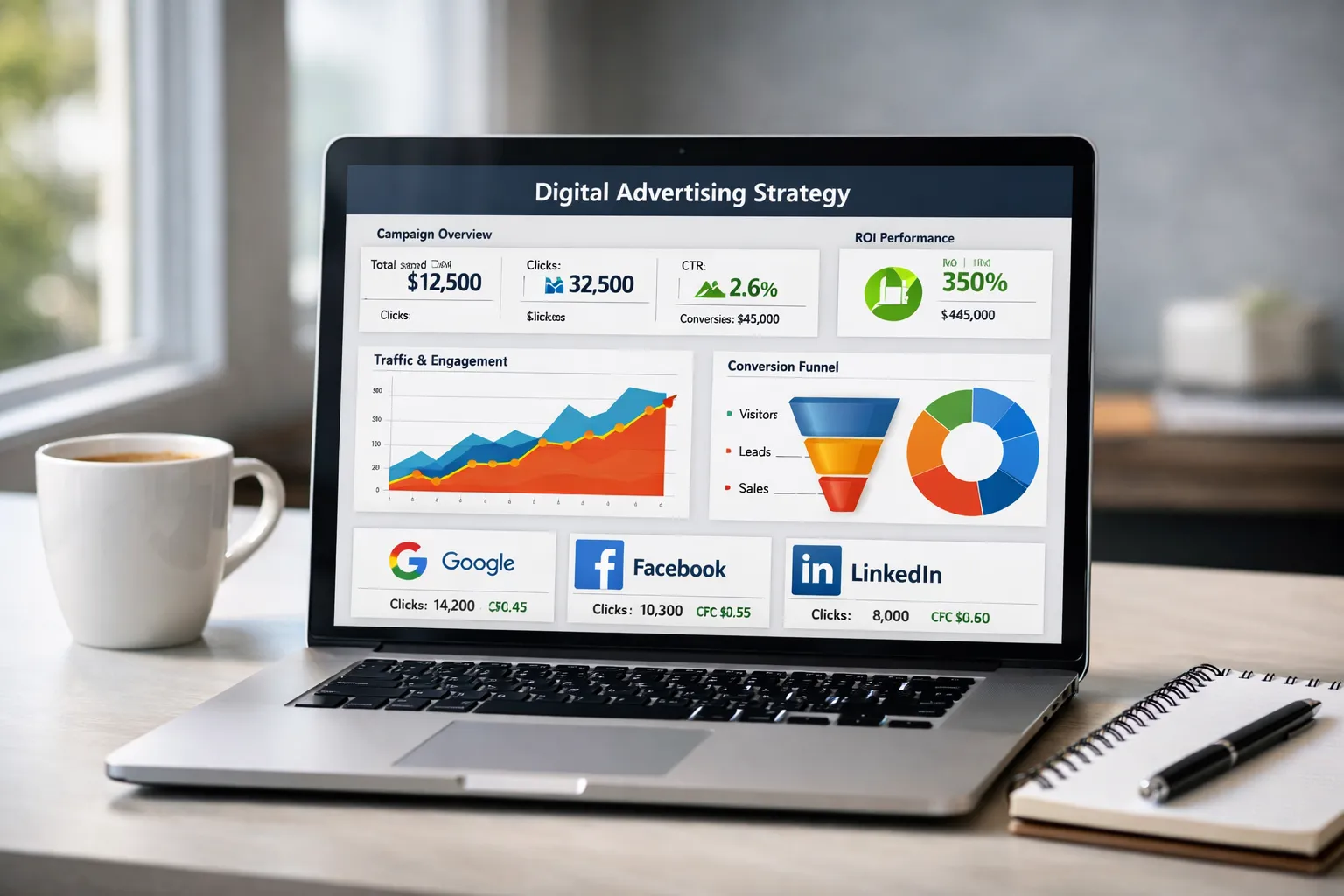
Businesses that grow with digital advertising track which campaigns bring in revenue and which ones just waste money. That’s the core of any digital advertising strategy: knowing what pays you back.
The problem? Most companies either chase traffic without measuring results or focus on quick wins without building anything sustainable. They spread budget across platforms, hoping something works, then can’t figure out why growth stalls after the first few months.
This guide breaks down how businesses turn digital advertising into a growth system instead of a guessing game. You’ll see which platforms work for different goals, how to pick formats that convert, and what metrics prove campaigns are actually paying off.
Let’s start with the foundation.
Digital advertising strategy is a plan that defines which platforms you’ll use, who you’ll target, and how you’ll measure revenue from ad spend. It’s how you pick the right channels, reach the right people, and track actual results instead of vanity metrics.
The stakes are high. Global digital ad spending hit $650 billion in 2025 and is projected to reach $1,593 billion by 2035. That’s a massive amount of money flowing through online advertising, and to benefit from it, you need a strategy that connects spending to results. Otherwise, you’re just throwing budget at platforms and hoping something sticks.
An effective strategy links every campaign to a specific business outcome you can track, like new leads or paying customers. Without one, you’re guessing which ads work and hoping the numbers eventually make sense. Strategy turns advertising from an expense into a predictable growth channel.

Paid traffic wins because you control when campaigns run and how much you spend, while organic depends on algorithms you can’t predict. Think of paid media like a water faucet. You decide when to turn it on, how much flow you need, and when to dial it back based on your capacity to handle new customers.
Organic traffic, by contrast, works more like waiting for rain. You hope it shows up, but you can’t control when or how much you’ll get. Even when it does work, one algorithm change from Google can wipe out your rankings overnight and take all that traffic with it. Building momentum through earned media or organic content also takes months, and the results still aren’t guaranteed.
With paid advertising, you can directly influence your growth rate. Need more leads this week? Increase your ad spend. If you’re swamped with customers and can’t handle more, just turn campaigns off until you’re ready. That level of control doesn’t exist with organic methods.
Most campaigns burn money before they even start running. That’s because businesses skip the planning part and jump straight to throwing cash at Facebook or Google. Strategy doesn’t have to be complicated, but you do need to nail down a few things first.
Get these four pieces locked in before you launch anything, and you’ll skip the expensive part where you realize the campaign was doomed from day one.

An ad platform is your distribution channel, and picking the wrong one is like opening a boutique in an empty parking lot. The platform you choose should match where your audience spends time and where they’re ready to act.
For example, Facebook and Instagram work best for products people need to see before they buy. You can target audiences based on interests, hobbies, and online behavior, which means reaching people who’ve already engaged with topics close to what you’re selling. If you’re building awareness or retargeting past visitors, social media platforms give you that level of control.
For higher-intent traffic, Google Ads catches people at a different stage. Someone typing a search is actively hunting for a solution right now. That intent is why paid media campaigns on Google Search cost more per click, but the conversion rates usually justify it since you’re catching people ready to buy.
LinkedIn works well if you run a B2B business. It’s on the expensive side, but everyone browsing there is in work mode, not entertainment mode. That mindset shows up in lead quality. Often, one good contract covers months of ad spend.
Not all ad formats deliver the same results. The one you pick depends on where your audience hangs out and what action you need them to take, such as:
The format you choose should match where your audience spends time and what type of action makes sense for that platform.
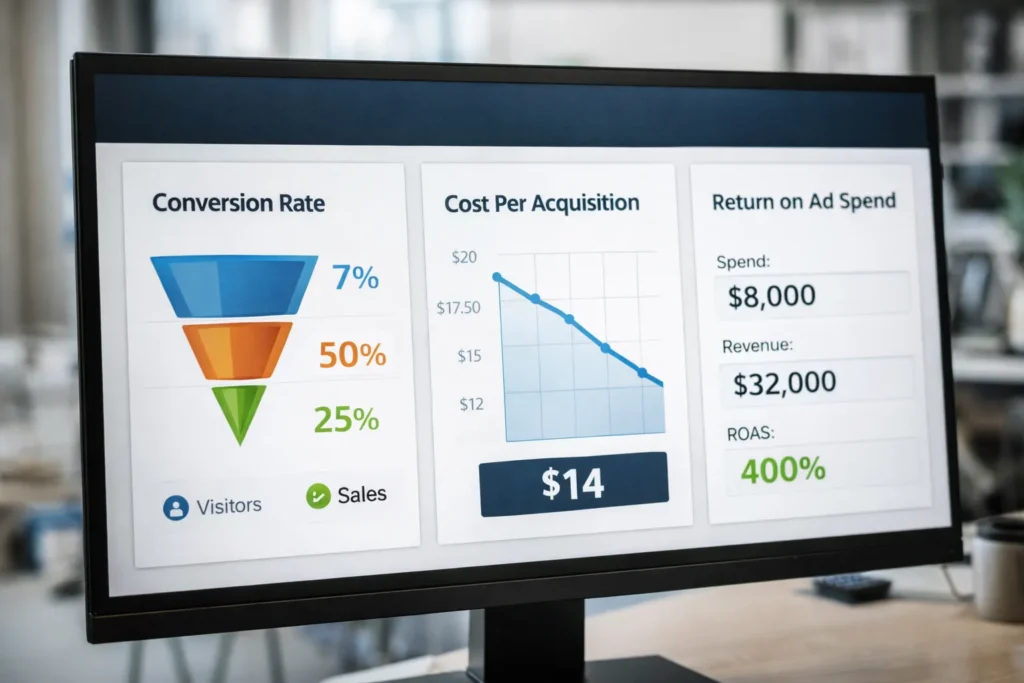
The real power of digital advertising shows up when you track numbers that connect directly to profit, not just activity. But most businesses drown in data and can’t tell which ad campaigns make money.
So focus on these three key metrics to measure whether your ad spend is working:
| Metric | Why It Matters |
| Conversion Rate | Shows what percentage of people who click your ads become leads or customers. A high click-through rate means nothing if visitors don’t convert. |
| Cost Per Acquisition | Reveals exactly how much you’re paying to gain each new customer through paid media. This number needs to stay below your customer lifetime value, or you’re losing money. |
| Return on Ad Spend | Calculates how much revenue each dollar of ad spend generates. If you’re spending $100 to make $80, the campaign isn’t working regardless of traffic volume. |
These metrics give you the analytics capabilities to make real decisions about campaign performance. When you collect data on what drives revenue growth, you can scale winning campaigns and cut losing ones before they drain your budget. Cost tracking alone isn’t enough. You need to know if that cost is turning into business growth.
Machine learning improves ads by analyzing user behavior patterns and automatically adjusting targeting and bids to reach people most likely to convert. In other words, AI handles the heavy lifting, processing thousands of data points per second while you focus on strategy rather than daily tweaks.
It’s only possible because algorithms constantly watch which audience segments respond to your ads and which ones ignore them. Programmatic advertising platforms then shift your ad spend toward the groups taking action, running these calculations in real time so campaigns optimize throughout the day.
Over time, machine learning gets even better at predicting who will convert. That’s why many ad platforms use first-party data from previous customers to find similar audiences, and targeting accuracy improves as more data comes in.
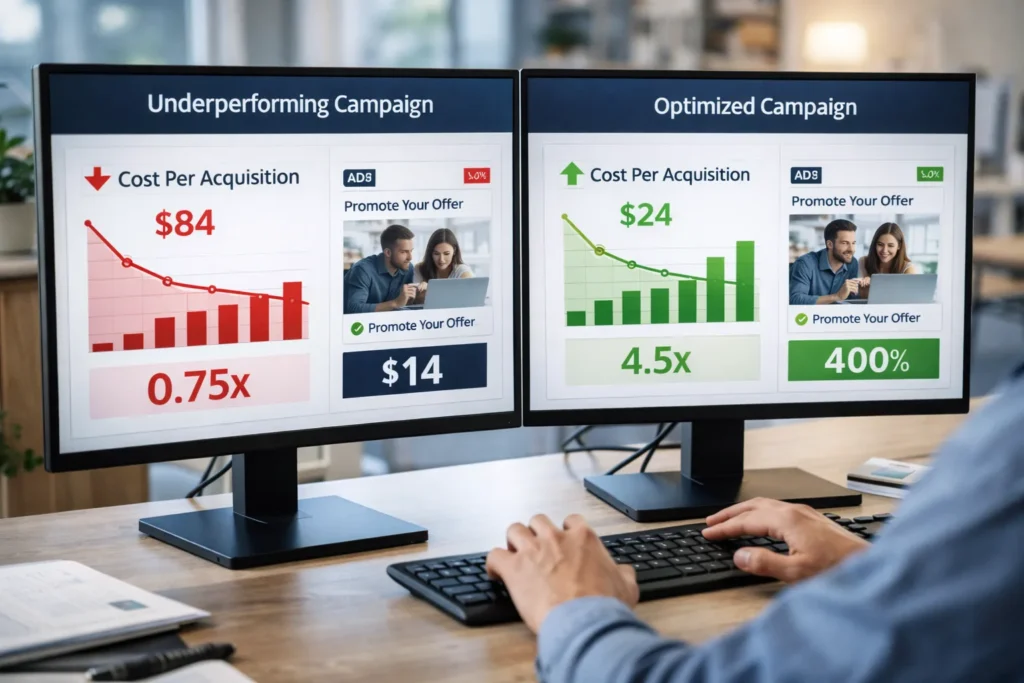
Running ads is one thing, but scaling profitable campaigns is where growth really multiplies. To turn successful ads into scalable growth, focus on these two areas:
Run the same ad to multiple audience groups and track which ones convert into customers at the lowest cost. Once you know which segments perform best, put more budget there and pause the underperforming ones. Sometimes a simple adjustment like narrowing your age range or switching from “interests” to “behaviors” can cut your cost per customer in half.
Check your numbers regularly to see which ads and keywords bring in conversions without burning budget. Move ad spend toward what’s already working and cut campaigns that cost too much per customer. If a campaign costs $200 to land a customer but your target is $50, either rework it or kill it.
Digital advertising drives growth when you match the right platforms to your goals, pick formats that convert, and track metrics tied to revenue. Most businesses waste budget by skipping the planning stage and hoping something works.
Start with one platform and one clear metric you can measure weekly. Track what’s profitable, cut what’s not, and scale gradually as the numbers prove themselves. Don’t spread thin across every channel at once.
The marketers who win with paid advertising didn’t get it perfect on day one. They measured, adjusted, and kept optimizing until the campaign performance justified the ad spend.
To learn more about digital strategy and user engagement, visit Movea Tech.